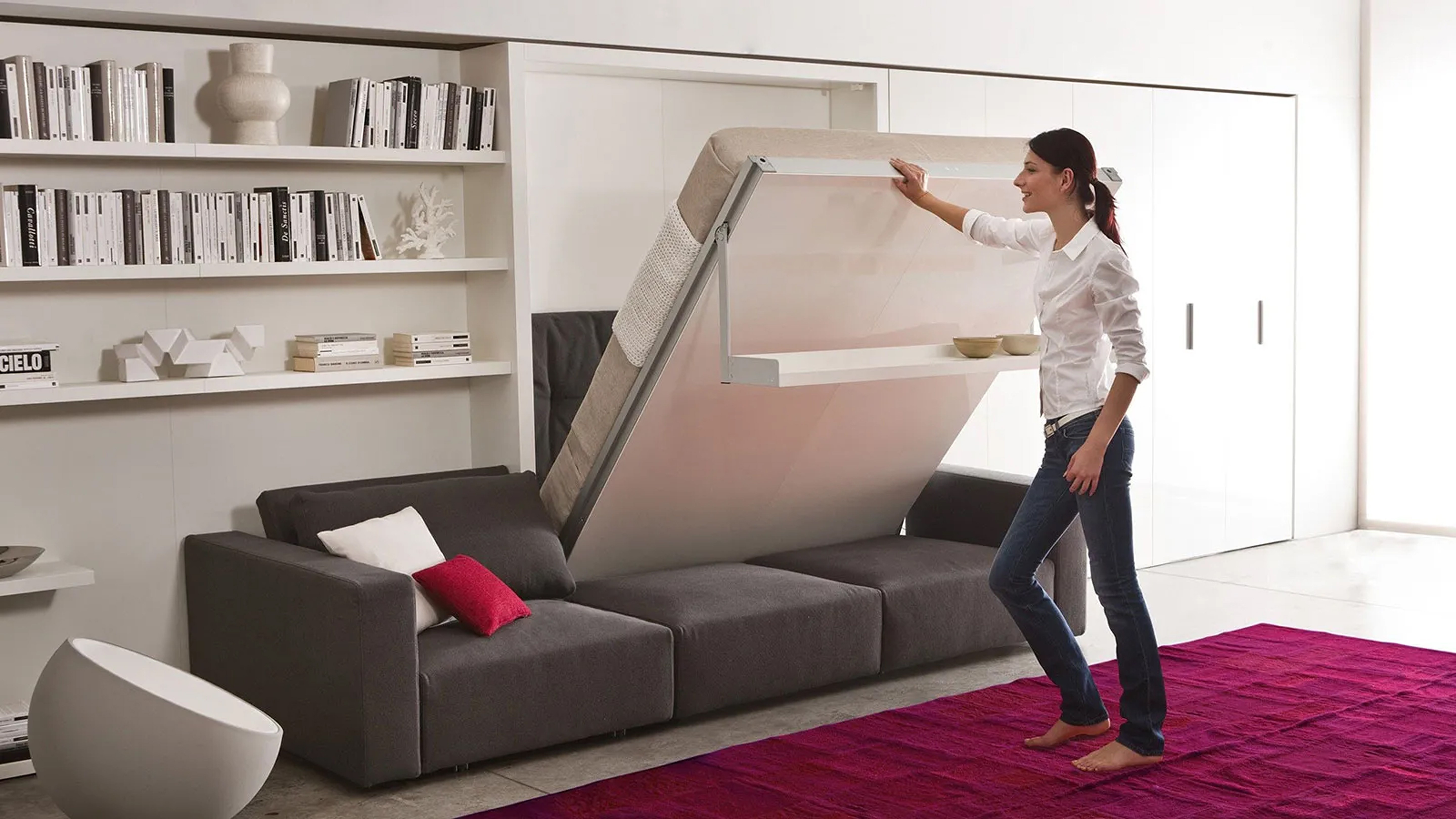
Are you considering installing a wall bed? (Perfect guide for utilizing small spaces)
Oct 22, 2025
Essential Basics to Know Before Installing a Wall Bed
The bed occupies more than half of the bedroom's space. Have you ever thought, "Can't this space be used differently during the day?"
You may relate even more if you live in a small space or a studio apartment.
The most practical solution to this problem is the 'Wall Bed,' which is the product most easily considered.
The wall bed is a structural piece of furniture that transforms a sleeping area into a living space.
However, the fact that it is not common means there are many aspects to consider.
This article provides a complete guide from the disadvantages to advantages of wall beds and A to Z for actual purchases, presenting a perfect guide to protect your valuable space and budget.
Essential Checklist for Safety and Durability Before Choosing a Wall Bed
Since wall beds are furniture that move daily and must support considerable weight, safety is paramount. First! Check the presence of a safety lock, second! Durability and load-bearing capacity, third! Operating mechanism should all be verified. Safety is something that cannot be overemphasized, especially for families with children.
1. Presence of Safety Lock
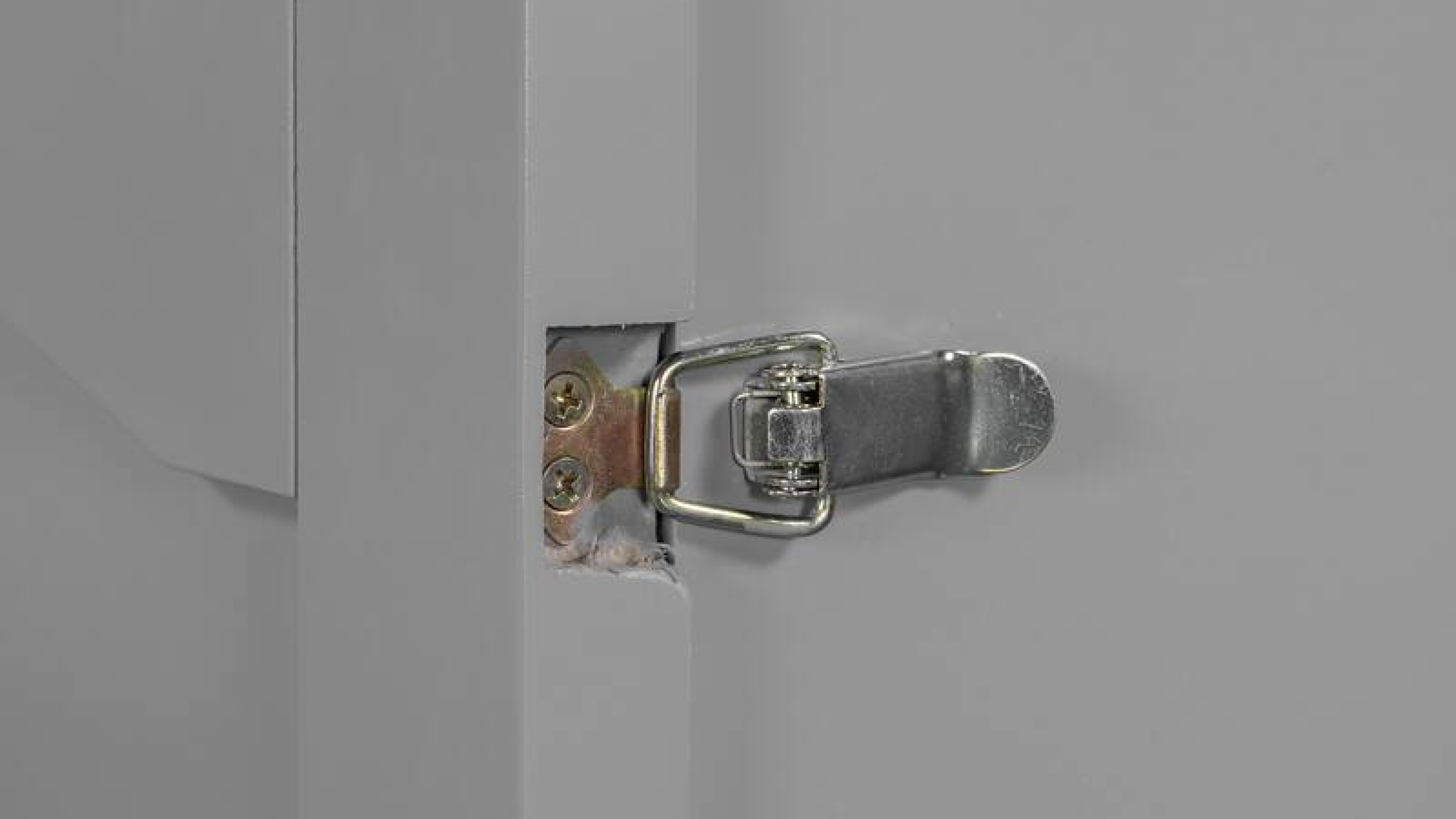
The biggest concern before introducing a wall bed is the anxiety of 'What if the bed suddenly falls?' Most wall beds have safety locks to prevent this.
Automatic Lock: A method that automatically locks when the bed closes beyond a certain angle.
Manual Lock: A method where you secure the bed with an additional lock after lifting it.
2. Durability and Load-bearing Capacity
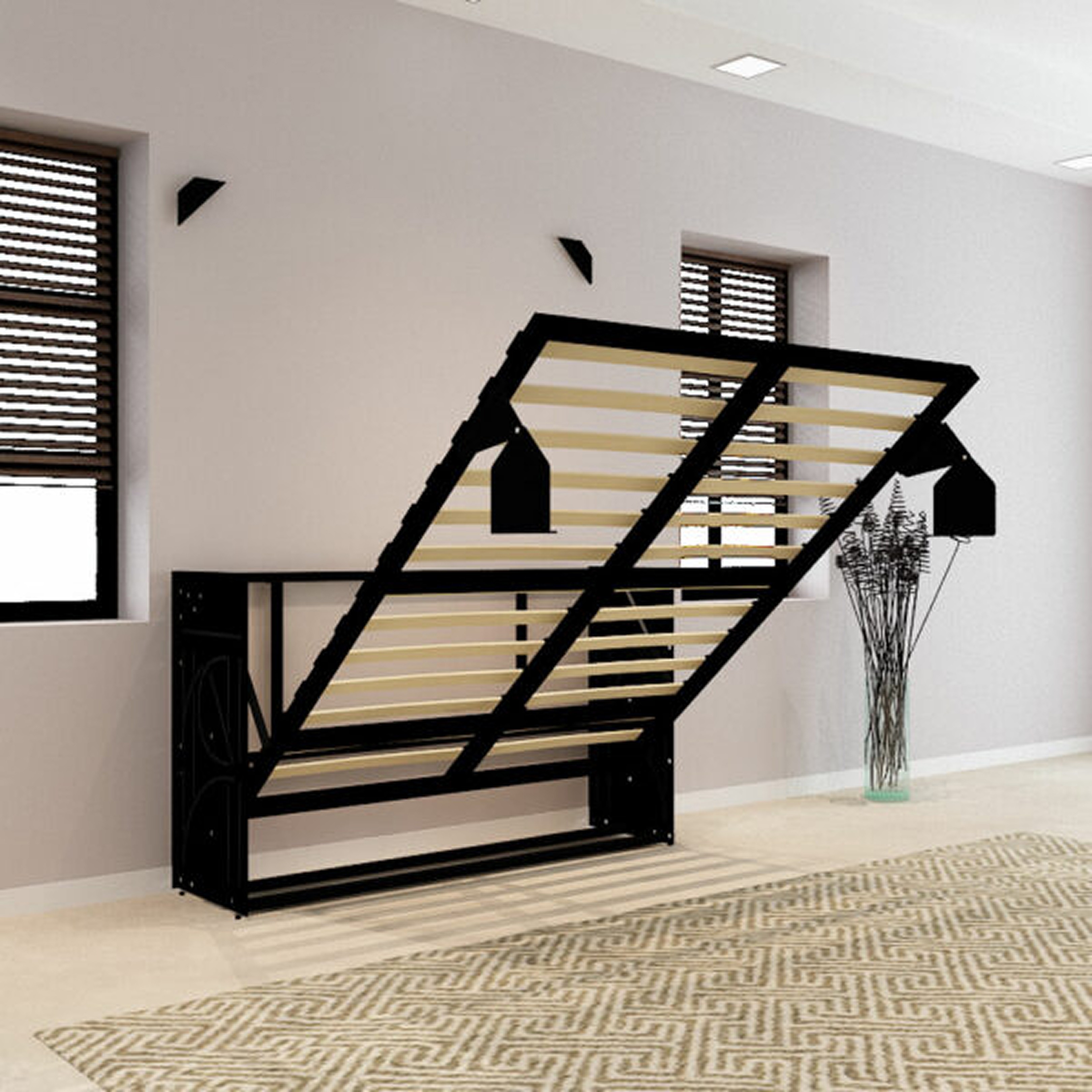
It's important to check the frame materials that make up the structure of the wall bed and its weight capacity.
Frame Material: Mainly metal and wood frames are used. Metal frames are durable and relatively inexpensive, while wood frames are more sturdy and provide a luxurious interior effect.
Load-bearing Capacity: The maximum load each product can support is specified. Consider the weight of the mattress and the user's body weight to select a product that can support generous loads.
3. Operating Mechanism: Which Method Is Right for You?
The methods for raising and lowering a wall bed are largely divided into two types. Compare their pros and cons and choose according to your lifestyle pattern.
Spring Mechanism
It uses several strong springs (tension coils) to balance the power. It is relatively inexpensive and has fewer breakdowns, but over time, the tension can weaken and make operation difficult.
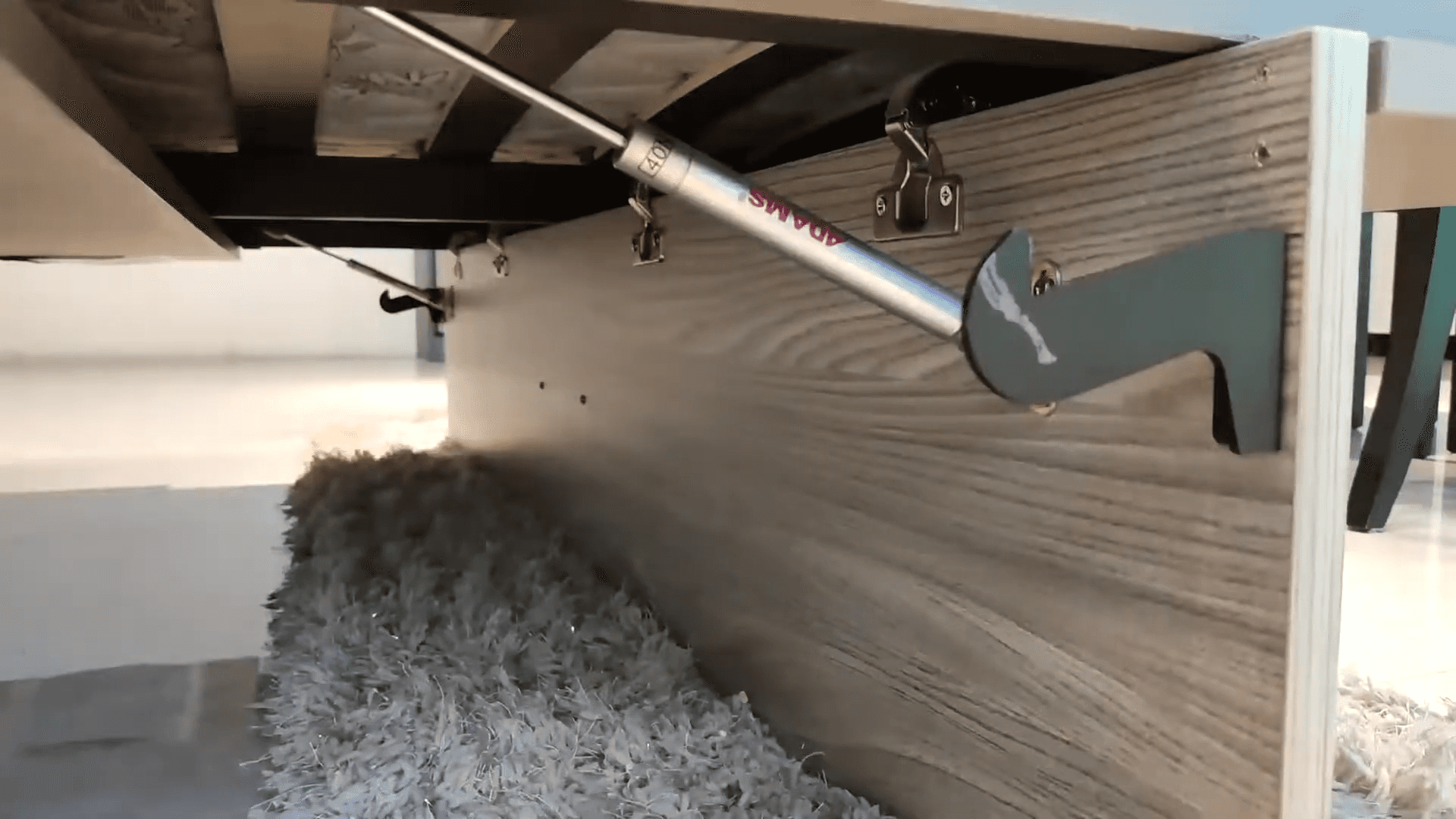
Hydraulic (Gas Cylinder) Mechanism
It uses gas pressure to lift and lower the bed smoothly with minimal force. It is very easy to operate and convenient, but pricier compared to the spring mechanism and may require cylinder replacement as the gas cylinder's lifespan ends. Recently, most users prefer the hydraulic method due to its convenience.
Precautions When Installing a Wall Bed
Confirming installation feasibility is as important as safety. Even if you've found a suitable wall bed for your home, it would be impractical if installation is impossible. To prevent such mishaps, pre-check whether installation space is viable.
1. Can It Be Installed on My Home's Wall?
Wall beds must be firmly fixed to the wall, so the type of wall is critically important for installation.
Concrete Wall
This is the most ideal and safe installation environment. Most structural walls (key walls supporting the building's weight) in Korean apartments are made of concrete. Its density is very high and provides secure support for the weight and load during the operation of a wall bed.
Drywall / Gypsum Board Wall
As a rule, direct installation is absolutely impossible. Drywall is only a finishing material wrapped with paper after compressing gypsum, and cannot bear any structural strength. Installing a wall bed here can lead to serious accidents where the drywall breaks and the entire wall bed falls forward. It's mainly used in non-load-bearing walls for partitioning spaces.
Brick Wall
If the bricks are solid, installation is possible. If they are hollow, caution is required. This structure is common in old houses or villas. While the bricks themselves are solid, the mortar between them can be relatively weak. In particular, lightweight or hollow bricks can break when anchors are installed.
Lightweight Foam Concrete (ALC) Block Wall
Extreme caution is required, and expert judgment is absolutely crucial. This material is made into block forms by adding foam to reduce the weight of concrete. It offers good insulation and is often used for non-load-bearing or partition walls. The 'light weight' advantage becomes a major drawback for wall bed installation as it's weak and can break easily.
Wooden Houses / Wood-Finished Walls
Once the position of the 'structural wood' inside the wall is accurately found, a very safe installation is possible. However, installation on thin, visible finishing wooden materials like louvers or plywood is not allowed.
2. Which Mattress Can Be Used?
The range of choice for mattresses for wall beds is very narrow. Due to the folding and unfolding feature of wall beds, very thick or heavy mattresses are difficult to use.
Dedicated Mattress
Many wall bed brands sell or recommend dedicated mattresses optimized for the weight distribution and thickness of their products.
General Mattress
If you wish to use a general mattress, make sure to check the manufacturer's recommended maximum thickness and weight specifications. If exceeded, the wall bed's storage function cannot be used, or there is a risk of safety accidents during storage.
Is a Wall Bed Truly Efficient? (An Honest Pros and Cons Analysis)
Like every product has its pros and cons, so do wall beds. To avoid regret after purchase, we gather user experiences for an honest comparison of advantages and disadvantages.
Pros of Wall Beds
Maximized Space Utilization
You can perfectly utilize space for different purposes - study, home gym, living room - during the day, instead of just the bed. It is the key solution for small room interiors. Recently, Murphy bed styles combining desks, sofas, bookshelves, etc., have become popular, further enhancing space efficiency.
Neat Interior
When not in use, it appears as a wall or is designed to look like a storage unit, allowing very neat and tidy usage.
Cons of Wall Beds
Inconvenient Bedding Arrangement
To use the function of the wall bed, you need to arrange the bedding placed on the bed every day. If you raise the bed without arranging the bedding, the blankets and pillows will tumble down, preventing the wall bed from closing. This is the point most users regret after purchasing a wall bed.
Heavy Bed
Even with help from springs and gas cylinders, the weight of the bed and frame is considerable. The process of opening and closing a wall bed can feel heavy and difficult, leading users to leave the wall bed unfolded and lose its intended function.
Installation Restrictions
As explained above, installation may not be possible depending on the wall's strength, and once installed, it's difficult to change locations.
Alternative to Wall Beds: 'Robotics Bed'
We've thoroughly reviewed the pros and cons of wall beds and purchase checklist so far. Wall beds are certainly items that can efficiently utilize limited space. However, due to the inconvenience of arranging bedding and raising and lowering the bed daily, people end up using it as a permanently unfolded bed.
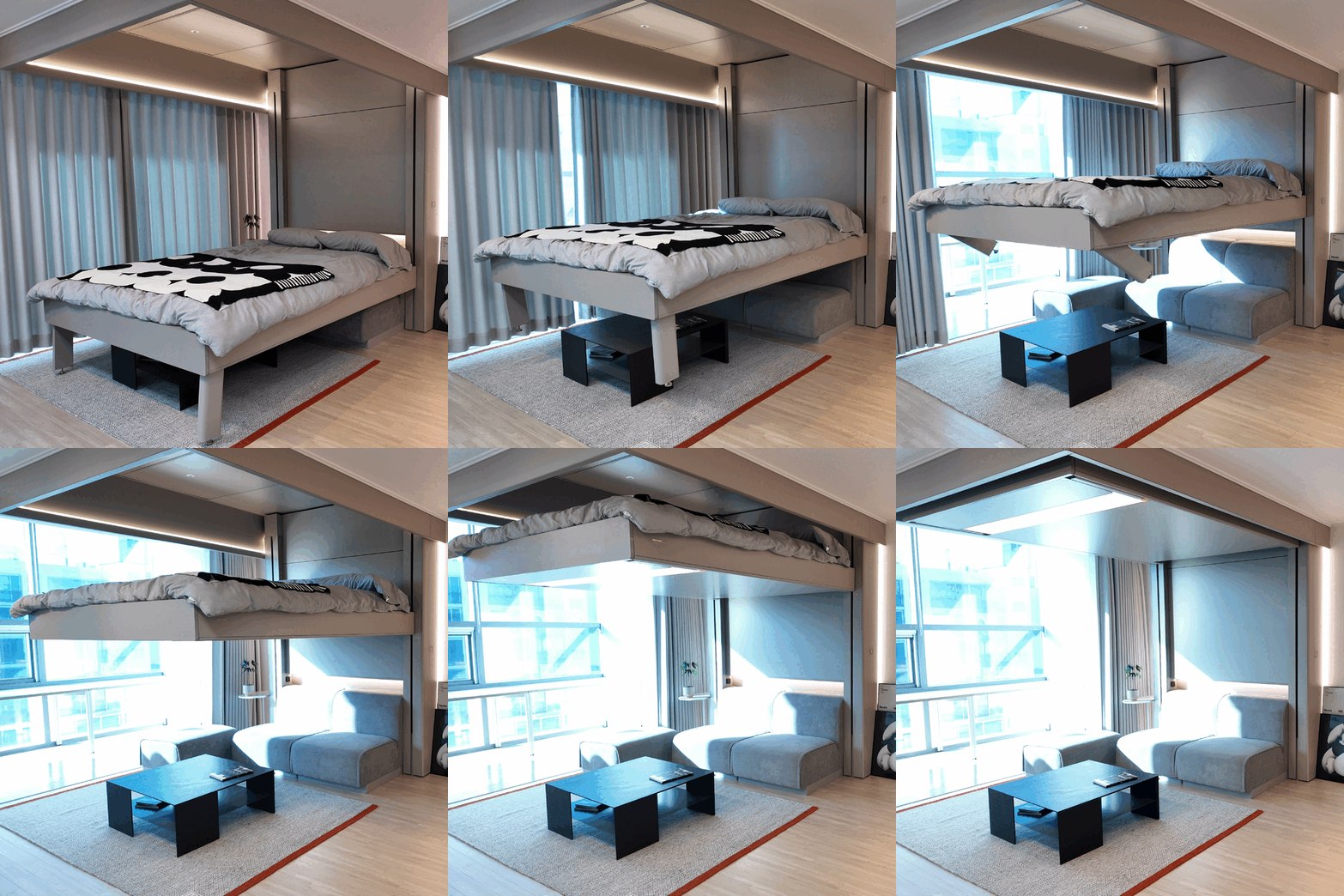
There is a solution that resolves the inconvenience of wall beds while efficiently using space. It's the Robotics Bed.
The Robotics Bed, with just the press of a button, lifts the bed to the ceiling, revealing the sofa or desk space below that was hidden. It doesn't require arranging bedding or manually folding up a heavy bed like wall beds. Truly elevating the concept of space utilization, it’s a solution that lets you experience genuine 'space transformation.'
Frequently Asked Questions (FAQ) When Installing a Wall Bed
Q
How do I clean and maintain a wall bed?
A
Wipe the frame with a soft cloth to remove dust, and periodically check the hydraulic device or spring part to ensure no foreign substances are caught. It is advisable to flip and air out the mattress at regular intervals, just like a regular bed. Cleaning the interior frame is safe to do with the bed lowered.
Q
Can it be reinstalled when moving?
A
Yes, it's possible. Wall beds require professional dismantling and reinstallation. The safest and most reliable method is to request relocation installation services through the customer service of the brand you purchased. We do not recommend self-relocation as there is a high risk of product damage or safety accidents.
Q
How should I handle bedding when raising the bed?
A
Most wall beds come with straps or belts that allow you to secure the duvet and pillow. While you can use these straps to hold the bedding in place as you lift the bed, they are very limited. Additionally, very thick duvets or multiple pillows may be difficult to store.
Interior
Are you considering installing a wall bed? (Perfect guide for utilizing small spaces)
View List
" width="120.00000356495207px"><path d="M 10.27 5.284 C 9.712 4.897 8.484 4.077 6.787 4.077 C 5.559 4.077 5.157 4.35 5.157 4.806 C 5.157 5.375 5.604 5.603 8.104 6.377 C 10.627 7.152 12.324 8.518 12.324 11.343 C 12.324 14.167 10.158 16.445 6.14 16.445 C 2.768 16.445 1.049 15.237 0 14.44 L 1.786 10.842 C 2.434 11.411 3.818 12.459 5.715 12.459 C 6.943 12.459 7.524 12.14 7.524 11.593 C 7.524 10.978 7.077 10.728 4.644 9.908 C 2.188 9.088 0.447 7.835 0.447 5.102 C 0.447 2.095 2.858 0.182 6.542 0.182 C 9.734 0.182 11.185 1.275 11.967 1.822 Z M 18.598 1.497 L 18.598 4.163 L 21.165 4.163 L 21.165 7.602 L 18.598 7.602 L 18.598 10.978 C 18.598 12.322 19.133 12.732 20.183 12.732 C 20.652 12.732 21.031 12.618 21.165 12.55 L 21.165 16.08 C 20.964 16.171 20.093 16.445 18.977 16.445 C 15.896 16.445 14.199 15.306 14.199 11.525 L 14.199 7.602 L 12.324 7.602 M 27.171 9.429 C 27.729 9.429 28.153 9.475 28.354 9.475 L 28.354 9.407 C 28.354 8.473 27.863 7.972 26.568 7.972 C 25.027 7.972 24.001 8.678 23.554 9.111 L 22.17 6.423 C 22.862 5.74 24.425 4.533 27.439 4.533 C 31.167 4.533 32.551 6.537 32.551 9.589 L 32.551 16.171 L 28.577 16.171 L 28.577 15.032 L 28.533 15.032 C 28.176 15.534 27.461 16.445 25.385 16.445 C 23.308 16.445 22.147 15.237 22.147 12.96 C 22.147 10.682 24.224 9.429 27.171 9.429 Z M 27.126 13.233 C 27.885 13.233 28.198 12.937 28.354 12.8 L 28.354 11.73 L 27.595 11.73 C 26.635 11.73 26.211 11.98 26.211 12.504 C 26.211 12.96 26.546 13.233 27.126 13.233 Z M 45.722 14.326 C 45.722 18.677 43.624 21 38.667 21 C 36.122 21 34.515 19.975 33.957 19.474 L 35.252 16.171 C 35.72 16.581 36.747 17.424 38.444 17.424 C 40.654 17.424 41.503 16.467 41.503 14.919 L 41.503 14.577 L 41.458 14.577 C 41.257 14.919 40.498 15.943 38.489 15.943 C 35.787 15.943 33.934 14.235 33.934 10.204 C 33.934 6.172 36.055 4.533 38.623 4.533 C 40.453 4.533 41.235 5.489 41.525 5.945 L 41.57 5.945 L 41.57 4.806 L 45.722 4.806 Z M 39.985 12.345 C 40.788 12.345 41.168 11.935 41.324 11.707 L 41.324 8.678 C 41.168 8.45 40.811 8.04 40.029 8.04 C 39.114 8.04 38.422 8.678 38.422 10.204 C 38.422 11.73 39.069 12.345 39.985 12.345 Z M 52.688 4.533 C 55.948 4.533 57.779 6.4 57.779 10.272 L 57.779 11.434 L 51.349 11.434 C 51.55 12.413 52.264 12.983 53.648 12.983 C 55.233 12.983 56.082 12.322 56.484 12.003 L 57.801 14.85 C 57.153 15.442 55.747 16.445 52.889 16.445 C 49.384 16.445 47.084 14.531 47.084 10.432 C 47.084 6.332 49.674 4.533 52.688 4.533 Z M 51.304 9.202 L 54.005 9.202 C 54.005 8.496 53.626 7.903 52.733 7.903 C 51.974 7.903 51.416 8.359 51.304 9.202 Z M 63.74 5.831 L 63.784 5.831 C 64.231 5.307 65.146 4.532 66.91 4.532 C 69.076 4.532 70.772 5.831 70.772 9.019 L 70.772 16.171 L 66.374 16.171 L 66.374 9.726 C 66.374 8.632 65.95 8.154 65.101 8.154 C 64.432 8.154 63.963 8.518 63.74 8.792 L 63.74 16.171 L 59.341 16.171 L 59.341 0 L 63.74 0 Z M 77.18 9.429 C 77.738 9.429 78.162 9.475 78.363 9.475 L 78.363 9.407 C 78.363 8.473 77.872 7.972 76.577 7.972 C 75.036 7.972 74.01 8.678 73.563 9.111 L 72.179 6.423 C 72.871 5.74 74.433 4.533 77.448 4.533 C 81.176 4.533 82.56 6.537 82.56 9.589 L 82.56 16.171 L 78.586 16.171 L 78.586 15.032 L 78.541 15.032 C 78.185 15.534 77.47 16.445 75.394 16.445 C 73.317 16.445 72.157 15.237 72.157 12.96 C 72.157 10.682 74.233 9.429 77.18 9.429 Z M 77.135 13.233 C 77.894 13.233 78.207 12.937 78.363 12.8 L 78.363 11.73 L 77.604 11.73 C 76.644 11.73 76.22 11.98 76.22 12.504 C 76.22 12.96 76.555 13.233 77.135 13.233 Z M 88.521 5.945 L 88.566 5.945 C 89.013 5.398 89.928 4.533 91.87 4.533 C 94.081 4.533 95.778 5.854 95.778 8.951 L 95.778 16.171 L 91.379 16.171 L 91.379 9.726 C 91.379 8.632 90.955 8.154 90.107 8.154 C 89.415 8.154 88.968 8.518 88.745 8.792 L 88.745 16.171 L 84.346 16.171 L 84.346 4.806 L 88.521 4.806 Z M 108.993 16.171 L 104.84 16.171 L 104.84 15.032 L 104.796 15.032 C 104.528 15.442 103.769 16.445 101.715 16.445 C 98.946 16.445 97.205 14.509 97.205 10.523 C 97.205 6.537 99.304 4.532 101.938 4.532 C 103.657 4.532 104.282 5.33 104.551 5.626 L 104.595 5.626 L 104.595 0 L 108.993 0 Z M 103.323 12.778 C 104.082 12.778 104.439 12.368 104.595 12.14 L 104.595 8.769 C 104.439 8.518 104.082 8.108 103.323 8.108 C 102.385 8.108 101.693 8.837 101.693 10.341 C 101.693 12.003 102.362 12.778 103.323 12.778 Z M 118.594 8.609 C 118.08 8.268 117.098 7.698 115.647 7.698 C 114.798 7.698 114.597 7.835 114.597 8.086 C 114.597 8.382 114.909 8.541 116.808 8.997 C 118.661 9.475 120 10.363 120 12.504 C 120 14.827 118.125 16.445 114.999 16.445 C 112.298 16.445 110.936 15.511 110.355 15.101 L 111.494 11.958 C 112.029 12.368 113.123 13.096 114.664 13.096 C 115.534 13.096 115.78 12.891 115.78 12.664 C 115.78 12.322 115.445 12.208 113.659 11.684 C 111.895 11.183 110.578 10.341 110.578 8.222 C 110.578 5.831 112.7 4.533 115.445 4.533 C 117.79 4.533 119.017 5.193 119.755 5.671 Z" fill="rgb(1, 1, 0)" height="20.99984793941212px" id="LTTkgcWV4" transform="translate(0 0)" width="120.00000356495207px"/></g></svg>)